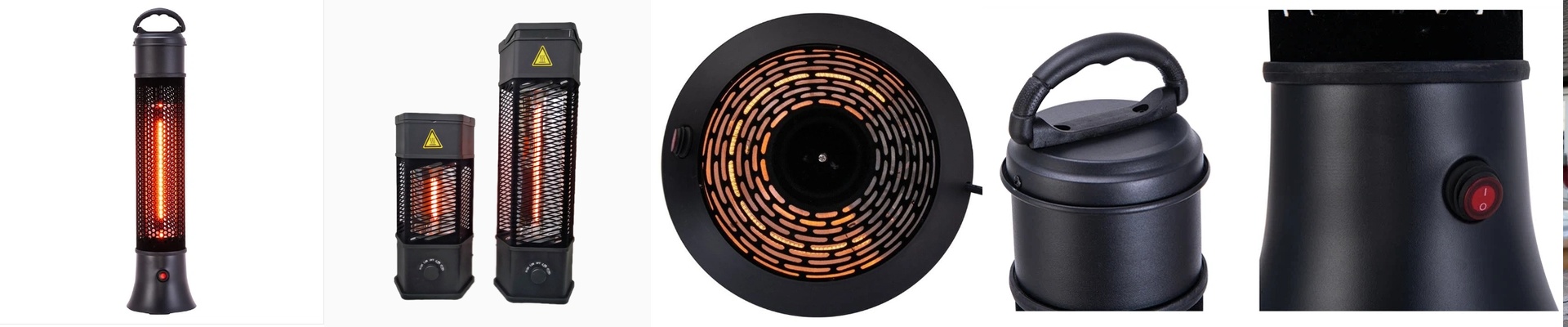




Keeping Your Bathroom Infrared Heaters Safe (And Dry)
Putting an infrared heater in a bathroom is a bit of a gamble if you aren’t careful. You’ve got steam everywhere and water droplets clinging to every surface. In that kind of environment, one tiny leak in your electrical insulation and you’ve got a ground fault on your hands. To keep things safe, you really only need to worry about two things: the housing of the lamp and how the terminals are sealed.
Dealing with Steam and “Arcing”
Here’s the thing about humid air: it doesn’t resist electricity nearly as well as dry air does. To stop the electricity from jumping where it shouldn’t, we use high-purity quartz glass. We make sure the walls are thick enough to stop “arcing” before it starts. But the glass has to be perfect. No microscopic cracks. No pinholes. Even a tiny leak lets moisture touch the tungsten filament, and that’s when the lamp either pops instantly or trips your breaker. Not a great way to start your morning.
The Danger Zone: Connectors and Terminals
Most of the failures happen right at the connection point. It’s the weakest link. If you use basic open-lead wires, the humidity will eat away at the copper. It oxidizes, the resistance goes up, and you get these dangerous heat spots. To stop that, we use sealed end-caps and contacts that don’t rust. Using IP-rated housings and tight connectors keeps the current exactly where it belongs—inside the circuit.
The Reality Check
High-wattage lamps feel great—they give you that instant heat—but they pull a lot of power. You can’t just wing it with the wiring. Make sure your wire gauge is thick enough to handle the peak load, otherwise, your walls could actually start overheating. And honestly? Insulation is great, but it isn’t a magic shield. You absolutely need a high-sensitivity GFCI (Ground Fault Circuit Interrupter) paired with the system to keep everyone safe. If you want to be 100% sure, grab a megohmmeter and check the insulation resistance before you flip the switch. If you see a reading below 100MΩ in a damp room, stop. That’s a huge red flag. Seal those junctions, get the wiring right, and your heater will handle the steam just fine.