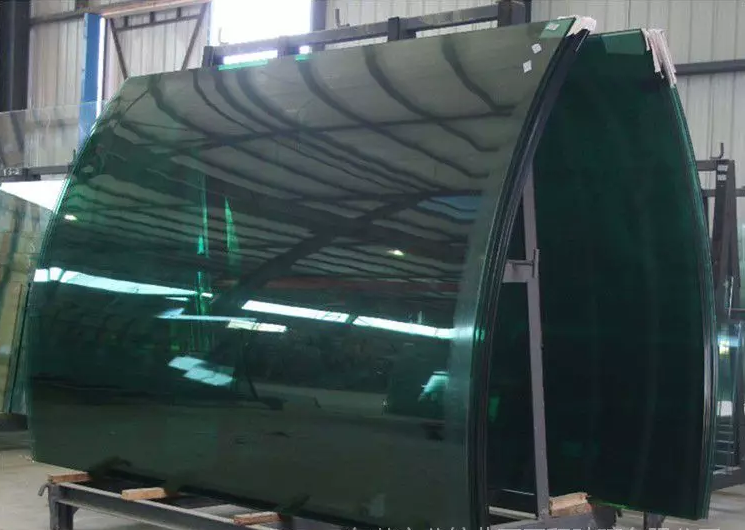
On the line, thin glass doesn’t forgive uneven heat. A cold spot sets up thermal stress that can show up as spontaneous fracture after bending or tempering. A hot streak gives you optical distortion you’ll see in the finished part. When you’re running substrates from 1.1 mm to 3.2 mm, convection ovens just can’t keep up with the repeatable, fast temperature profile the process needs. Here’s what we lean on technically. We use short-wave infrared quartz emitters tuned for glass, with a spectral peak that matches the material’s emissivity so the energy transfer is efficient. The heater array is laid out to give a uniform thermal field across the glass surface, which keeps lateral gradients from pushing warp and optical distortion. Power density is sized to the line speed, and the module drops in as a replacement for standard industrial footprints. Temperature control is closed-loop on the glass itself, not the heater, so the setpoint follows what the substrate is actually doing. Why this works in thin glass comes down to physics and practicality. In bending, tempering, and coating drying, uniform heating means fewer breaks and steadier optical quality. Ramp-up is faster than convection heating, so cycle time drops and throughput climbs. Energy use falls because the power goes into the glass, not into heating air and refractory. The payoff is a tighter, more stable process window: consistent curvature, predictable stress distribution, and less scrap from thermal shock. A few realities you have to plan for. Infrared is line-of-sight, so part geometry and fixture shadowing matter. Coated or low-e surfaces change emissivity—verify it and adjust the control strategy accordingly. Installation demands care with reflector alignment and cooling; even a small misalignment can create hot spots. And plan for lamp replacement on a preventive schedule so the thermal profile stays consistent.