


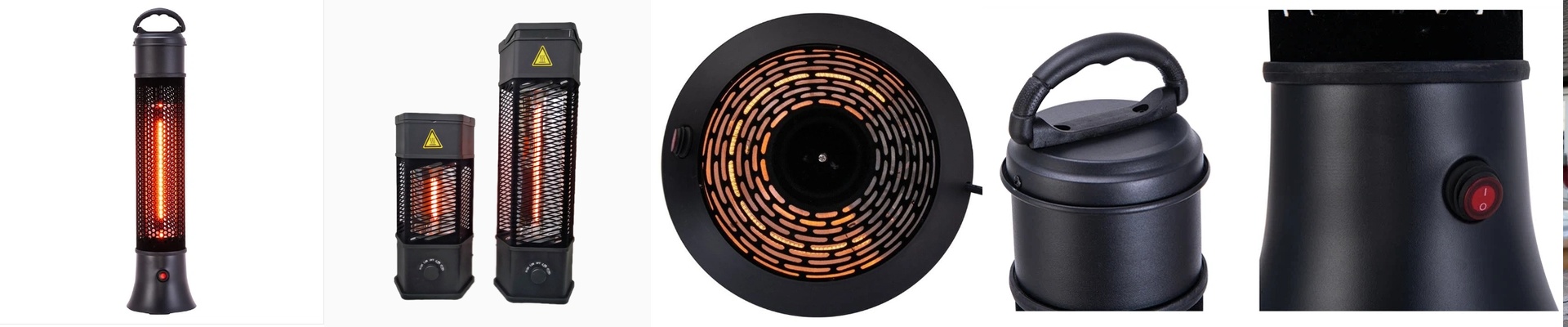

Out on the line, an insulating glass unit just sits there while the sealant crawls through its cure. Every minute you wait is a minute the furnace or autoclave sits idle. And if you get a cold spot, you’re gambling with a weak bond that will show up later as fog or adhesion failure. A portable glass sealant heater turns that bottleneck into a step you can actually control.
What we built it around, technically
We went with short-wave infrared (IR) quartz elements because the heat is fast and directional. Power is sized at 1.2–2.4 kW in a compact package—handheld or stand-mounted—with 110–240 V options and an industrial connector that can take the daily moves between stations. The point is a tight thermal footprint: heat the bead, not the spacer or the glass edge. It comes up to full output in seconds, and setpoint stability during the dwell keeps the temperature repeatable.
Why it holds up in real production
In bending and tempering, you need consistent preheat to keep thermal shock and edge compression issues from sneaking in. In lamination, uniform heat across the EVA/SGP/PVB stack drives out entrapments and shortens the cure cycle without scorching. For insulating glass sealing, the portable heater brings the bead up to application temperature quickly, so extrusion and adhesion stay uniform all the way around the perimeter. That translates to fewer rejects, faster changeovers, and more units through the day. And you’re not wasting energy heating the room or the machine frame—just the sealant.
Here is what matters on the floor
This isn’t a set-and-forget tool. Keep the working distance inside the specified range so you don’t cook a hot spot, and confirm the surface emissivity of the sealant—dark and reflective beads react differently. The heater is built for intermittent duty; if you’re running high volume continuously, pair it with a simple fixture and manage the duty cycle. Match the voltage and connector to your plant standard, and check clearances around adjacent components. When it’s set right, the thermal profile stays tight and repeatable.
บนสายการผลิต หน่วยกระจกฉนวนจะอยู่เฉยๆ ขณะที่วัสดุยาแนวค่อยๆ ผ่านกระบวนการบ่ม ทุกนาทีที่รอคือเวลาที่เตาหรือออโตเคลฟไม่ทำงาน และถ้าเกิดจุดเย็นขึ้น คุณกำลังเสี่ยงกับการยึดเกาะที่อ่อนแอซึ่งจะแสดงอาการในภายหลังเป็นฝ้าในกระจกหรือการลอกของกาว เครื่องทำความร้อนสำหรับวัสดุยาแนวกระจกแบบพกพาเปลี่ยนปัญหาคอขวดนี้ให้กลายเป็นขั้นตอนที่คุณควบคุมได้จริง
ทางเทคนิคที่เราสร้างขึ้นมา
เราเลือกใช้แสงอินฟราเรดคลื่นสั้น (IR) แบบควอตซ์ เพราะความร้อนรวดเร็วและมีทิศทาง กำลังไฟอยู่ที่ 1.2–2.4 kW ในชุดขนาดกะทัดรัด—ถือด้วยมือหรือยึดตั้งได้—พร้อมด้วยตัวเลือก 110–240 V และขั้วต่ออุตสาหกรรมที่ทนทานต่อการเคลื่อนย้ายระหว่างสถานีในแต่ละวัน จุดสำคัญคือการควบคุมความร้อนอย่างแม่นยำ: ให้ความร้อนที่เม็ดยาแนว ไม่ใช่ที่ตัวคั่นหรือตะแกรงกระจก เครื่องขึ้นเต็มกำลังในไม่กี่วินาที และความเสถียรของจุดตั้งค่าในช่วงเวลาคงที่ช่วยให้ควบคุมอุณหภูมิได้ซ้ำได้
เหตุผลที่ใช้ได้จริงในกระบวนการผลิต
ในกระบวนการดัดและเพิ่มความแข็งแรง ต้องการการอุ่นล่วงหน้าที่สม่ำเสมอเพื่อป้องกันปัญหาช็อกความร้อนและแรงกดที่ขอบกระจก ในการลามิเนต การให้ความร้อนที่สม่ำเสมอตลอดชั้น EVA/SGP/PVB จะช่วยขับไล่ฟองอากาศและลดเวลาบ่มโดยไม่เกิดการไหม้ สำหรับการซีลกระจกฉนวน เครื่องทำความร้อนแบบพกพาจะเร่งให้อุณหภูมิเม็ดยาแนวขึ้นถึงจุดใช้งานเร็วขึ้น ทำให้การอัดรีดและการยึดเกาะทั่วรอบขอบกระจกสม่ำเสมอ ผลลัพธ์คือของเสียลดลง การเปลี่ยนสายงานเร็วขึ้น และผลิตได้มากขึ้นในหนึ่งวัน อีกทั้งไม่เปลืองพลังงานโดยการทำความร้อนห้องหรือโครงเครื่องจักร—ทำความร้อนเฉพาะที่วัสดุยาแนวเท่านั้น
สิ่งที่ต้องใส่ใจในพื้นที่ผลิต
นี่ไม่ใช่อุปกรณ์ที่ตั้งค่าแล้วลืม ต้องรักษาระยะห่างในการทำงานให้อยู่ในช่วงที่กำหนดเพื่อป้องกันไม่ให้เกิดจุดร้อน และตรวจสอบค่า emissivity ของพื้นผิววัสดุยาแนว—เม็ดยาแนวมืดและสะท้อนแสงจะตอบสนองต่างกัน เครื่องทำความร้อนออกแบบมาสำหรับการใช้งานเป็นช่วง; หากใช้ในปริมาณมากต่อเนื่อง ควรจับคู่กับอุปกรณ์จับยึดพื้นฐานและควบคุมรอบการทำงาน ให้เลือกแรงดันและขั้วต่อให้ตรงกับมาตรฐานโรงงาน และตรวจสอบระยะห่างรอบๆ ชิ้นส่วนใกล้เคียง เมื่อปรับตั้งถูกต้อง รูปแบบความร้อนจะสามารถควบคุมและทำซ้ำได้อย่างแน่นอน